





If you’ve ever stood in front of a cold oven with a hungry family and a dinner reservation that’s not happening, you know the real question isn’t about bake times or blue flames; it’s “which one will cost me less grief and less money to keep running?”
In San Francisco, where Victorian apartments share walls with sleek new condos and PG&E bills already make you wince, the gas-versus-electric oven debate has a local accent. This guide cuts through the noise. We’ll tell you straight up which oven is easier to live with, what breaks most often, what you can fix yourself, and when it’s time to call in a pro.
The Short Answer: Which Oven is Easier to Upkeep?
Gas ovens are usually a little easier and cheaper to keep running. They have fewer electronic parts, so there is less to break. Most gas repairs come down to one cheap part, like the igniter.
Electric ovens are simpler and safer to work on yourself, at least for the common fix. Swapping a heating element is one of the easiest repairs in the kitchen. The catch is the control board. When that fails, the bill climbs fast, and on an older oven, it can cost more than the oven is worth.
Here is the thought from our repair experience: If you want the lowest lifetime hassle, gas has a slight edge. If you want the easiest do-it-yourself fix, electric wins on elements but stings more when the electronics go.
| Factor | Gas oven | Electric oven |
| Routine upkeep | Low. Clean the burner ports, check the flame, wipe the door seal | Low. Wipe the elements, clean spills, check the door seal |
| Most common failure | Weak or dead igniter | Burned-out bake element |
| Easiest DIY fix | Cleaning burner ports (free) | Swapping a bake element (about $20 to $85 in parts) |
| Priciest common fix | Gas safety valve, about $200 to $350 | Control board, about $250 to $450 |
| Safe to DIY? | Some jobs, but gas and fumes raise the risk | Yes for elements, but 240 volts can kill you |
| Typical lifespan | About 15 to 20 years | About 13 to 15 years |
| Bay Area cost note | Gas repairs run 10 to 20 percent more here | Element swaps are the cheapest pro visit |
What Mostly Fails on a Gas Oven (and What SF Owners See Most)
In a city where many kitchens still cradle a 30-inch gas range, the hot surface igniter is the star of repair calls. But other parts can call it quits, too. Here’s the hit list, ranked by how often they ruin dinner.
1. Weak or Failed Igniter
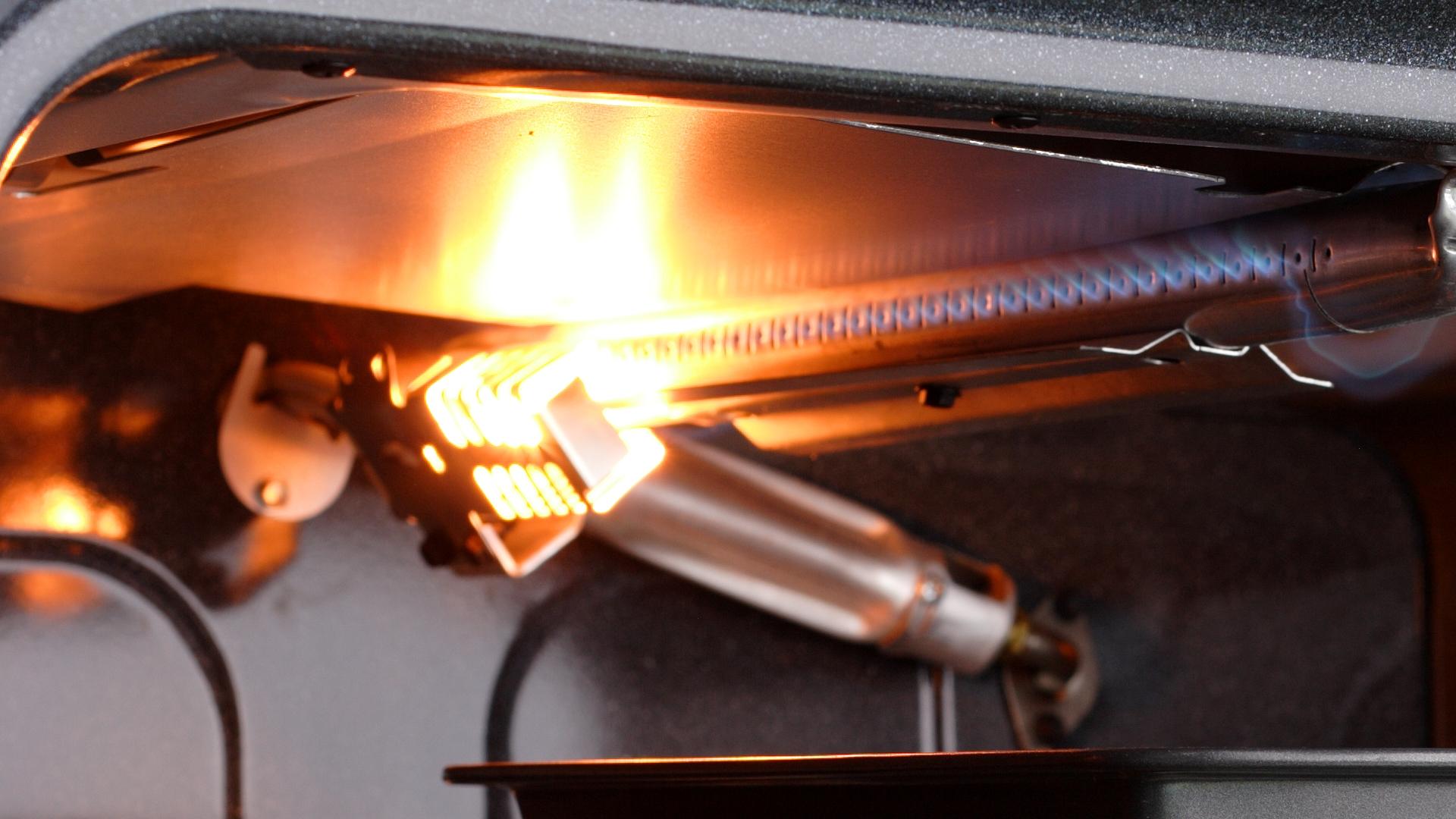
This is the #1 gas oven repair. The symptom is clear: the igniter glows orange or yellow (it should be bright white), you hear clicking, but the oven never lights. Over 3 to 5 years, the igniter weakens and can’t draw enough current to open the gas safety valve. The fix is a moderate DIY—pull the oven away, test with a multimeter and a clamp-on ammeter (the igniter should draw 3.2–3.6 amps), then swap in a new one. Part cost: $40–$80. Pro repair in SF: $150–$250. Many local forums mention that the igniter fails slowly, so if your oven takes longer to preheat, that’s your warning.
2. Failed Gas Safety Valve
Gas reaches the oven but never gets to the burner, even with a good igniter. The valve’s coil can read between 0 and 50 ohms if it’s healthy. This is less common, but when it happens, you’ll smell no gas and see no flame. It’s usually a pro job. Expect to pay $200–$350 in the Bay Area, and always check the igniter first; a lot of people replace the valve only to find the igniter was the real culprit.
3. Clogged Burner Ports
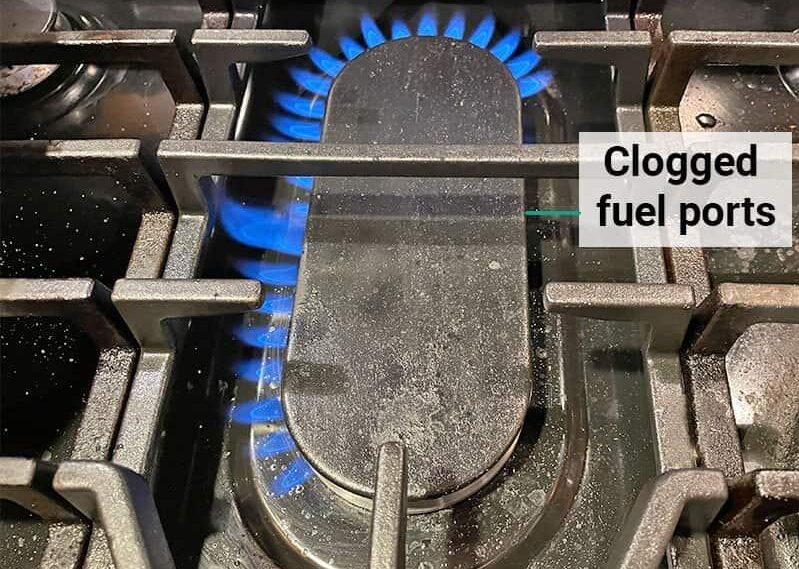
Weak, yellow, or uneven flames? Food debris is often the villain. This is the easiest & Free fix on the list. Just takes minutes after the oven cools. Use a needle or a pin to gently clear the tiny holes along the burner tube, and this costs you nothing. Do it once or twice a year, and you will dodge most flame problems. It’s a pure DIY job.
4. Temperature Sensor Drift
Gas ovens also use a sensor to regulate temperature. If it fails, your oven might run too hot or too cool. Symptom: Inaccurate temperature. Replacement is usually a pro job, costing about $100-$200 fitted.
5. Gas Supply Problems
If the burners and oven are both dead, the oven may be fine. A kinked line or a valve turned off can cut the gas. Here is the rule that matters most. If you smell gas, do not troubleshoot. Shut the gas off at the meter, leave, and call PG&E or 911 from outside. Never try to find a leak yourself. This one is a pro call.
6. Door Gasket Wear
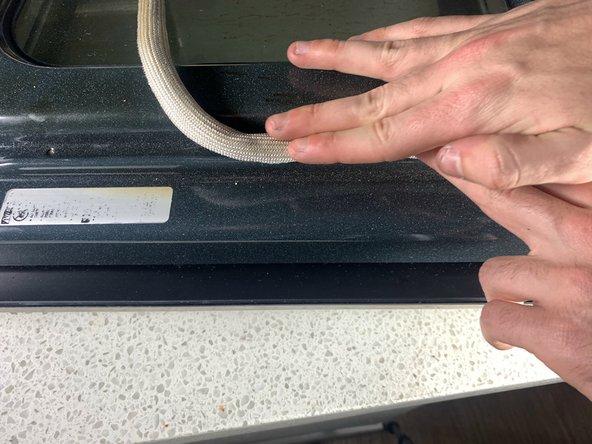
A worn or damaged gasket lets heat escape, making your oven work harder and cook unevenly. Symptom: Longer bake times, heat escaping from the door. You can usually spot the cracked or flattened spots by hand. On most ovens, this is an easy DIY swap with a low-cost part, often under $50. No tools and no tech needed for the common models. But if you are not technical, then why not be worth calling a pro?
Common Electric Oven Repairs
Electric ovens have fewer mechanical pieces and often use high-voltage elements to produce heat. When something goes wrong, it’s usually one of these parts, and that fails, jumping the bills.
1. Burned-Out Bake or Broil Element

Behind 65–70% of our repair calls, we found: “oven won’t heat”. The bottom element (bake) does most of the work. Look for a visible blister, crack, or coil that glows only in patches. Elements last 5–10 years on average.
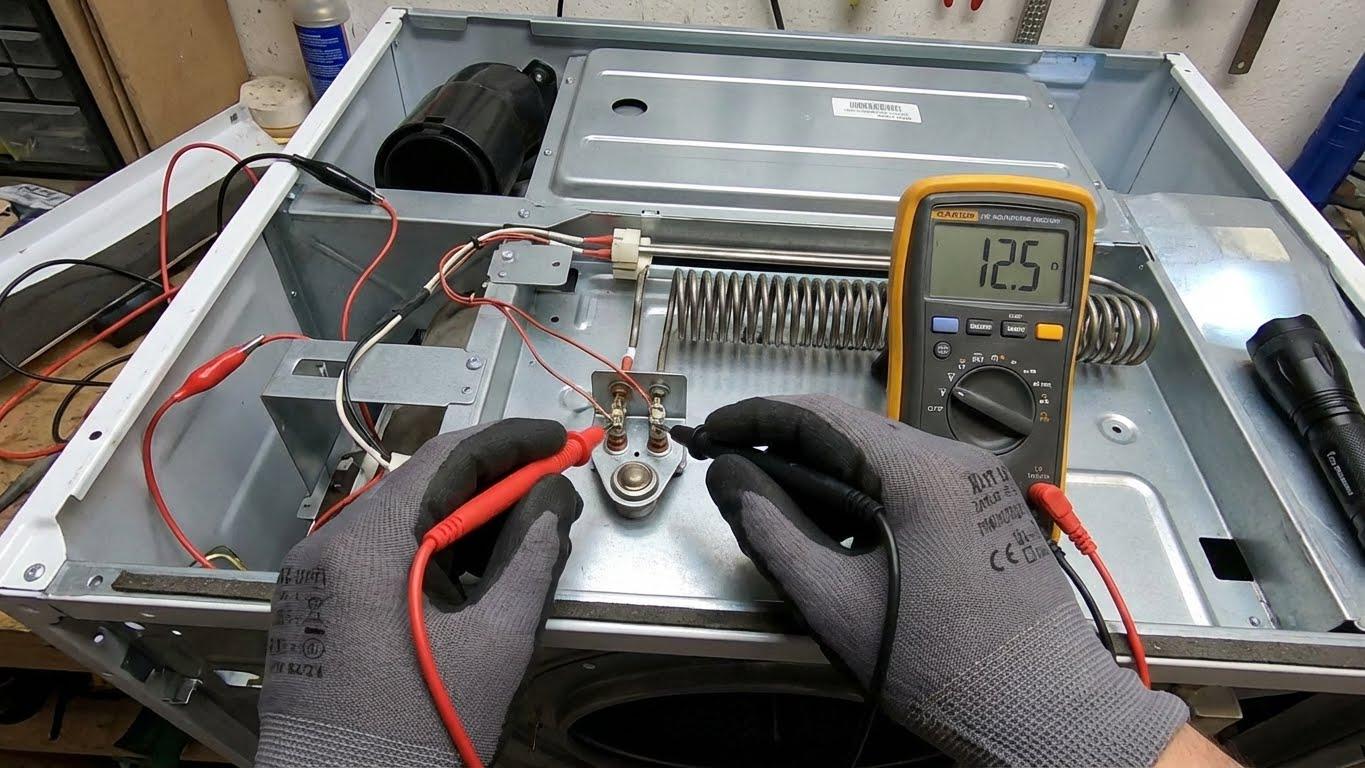
This is one of the more approachable DIY repairs. The part is around $20–$85, but the 240-volt supply is lethal. Cut the power at the double-pole breaker and confirm it’s dead before you touch anything. Pro installation in SF averages between $125–$225.
2. Faulty Temperature Sensor Probe
The probe measures the oven temperature. When it fails, the oven bakes at the wrong heat or throws an error code. It reads about 1,080 ohms at room temperature, so a tech can test it fast with a multimeter. Try recalibrating first if the oven is only slightly off. If not, it is a quick, low-cost swap at about $100 to $200 fitted. Easy DIY or a short visit.
3. Faulty Temperature Sensor Probe
Same story as gas: inaccurate temps, error codes like F1 or F3. Test it yourself: a reading far off from 1,080 ohms at room temp means replace it. Fitted cost: $100–$200.
4. Control Board Failure

This is the expensive one. The board is the oven’s brain, and power surges plus self-clean heat wear it out. You get codes like F1 through F4, or an oven that will not hold heat or shut off. A pro replaces it for about $250 to $450, and parts for old models are often gone.
Tip: Some shops rebuild your board for far less. On an old oven, consider replacing.
5. Blown Thermal Fuse

This safety part cuts power when things overheat, and the self-cleaning cycle is the usual trigger. So the oven will not turn on, or it quits heating right after a hot cycle. Do not just swap the fuse and move on. It did its job by shutting down, so a tech should find out what made it overheat. Best handled by a pro. The fuse itself is cheap.
6. Damaged Internal Wiring

Heat and age can burn or melt the wire terminals near the elements. Once that happens you may see scorched connectors, smell burning, or lose power to a part. This is not a weekend project. Bad wiring in a 240-volt oven is a fire and shock risk, so stop and call a licensed tech. Cost depends on the damage, but safety, not price, is the reason to hire out.
7. Door Gasket or Hinge Wear
Open and close the door enough times and the seal wears out and the hinges loosen. Then heat leaks and the door will not sit straight or shut fully. A worn gasket is an easy DIY swap for a cheap part. Hinges and their springs hold real tension and can snap back, so those are usually a pro job. Figure a low cost for seals, more for a hinge repair.
Which Is Easier and Cheaper to Fix?
Both oven types have common repairs, but costs vary by the failed component. Compare the most frequent gas and electric oven repairs, including DIY difficulty, parts cost, and typical professional repair costs.
Common Gas Oven Repairs Costs
| Problem | DIY or Pro? | Part Cost | Typical Pro Cost (SF) |
| Oven won’t heat, igniter glows | DIY (with multimeter) | $40–$80 | $150–$250 |
| No gas flow, igniter good | Pro (test safety valve) | $80–$150 | $200–$350 |
| Uneven flame, slow heating | DIY (clean ports) | $0 | Depends |
| Temperature inaccurate | DIY/pro | $20–$50 | $100–$200 |
| Heat loss around the door | DIY (gasket) | $20–$40 | $80–$120 |
Note: the parts and pro technical cost can vary depending on the company and areas. It’s just a rough estimate to give you an idea of the costs.
Common Electric Oven Repairs Costs
| Problem | DIY or Pro? | Part Cost | Typical Pro Cost (SF) |
| No heat, element visually damaged | DIY (breaker off!) | $20–$85 | $125–$225 |
| Oven temp wrong, error codes | DIY (test ohms) | $15–$40 | $100–$200 |
| Oven won’t start, erratic display | Pro (control board) | $150–$300 | $250–$450+ |
| Completely dead, no power | Pro (thermal fuse) | $15–$30 | $120–$200 |
| Burnt wire smell | Pro only | N/A | $150–$300 |
| Door won’t close tight | DIY (gasket) | $20–$40 | $80–$120 |
Note: the parts and pro technical cost can vary depending on the company and areas. It’s just a rough estimate to give you an idea of the costs.
Gas vs. Electric Oven Lifespan
Yes, gas ovens usually last longer. Gas ovens last 15–20 years, and electric ovens last 10–15 years on average.
The reason is simple: gas ovens rely on a mechanical burner and a replaceable igniter, with few electronics and less to fail. Electric ovens depend on a control board that can be fried by heat, power surges, or the self-clean cycle.
Final Thought
So, which should you choose? If you value lower repair costs, simpler fixes, and easier DIY potential, an electric oven is the clear winner. If you prefer the cooking performance of gas, just be prepared for potentially higher repair bills and to call a pro for most issues.
No matter which you have, a little regular maintenance goes a long way. And remember: if you’re ever unsure about a repair, especially with gas or high-voltage electricity, calling a licensed professional is always the smartest move.