




The most common reason your oven door won’t latch is bent or misaligned hinges, often caused by leaning on the door or not reseating it correctly after cleaning. A simple washcloth can realign the hinge tension. If your door came off and was put back on, it’s almost certainly not seated fully.
Before you reach for a screwdriver or call a repair technician, check our ranked checklist below, starting with a viral household hack that fixes the problem in under 60 seconds.
This fix works the same across Westinghouse, Frigidaire, Samsung, Bosch, Jenn-Air, Hotpoint, KitchenAid, Whirlpool, and GE ovens, since they share the same basic hinge design.
Is it safe to keep using the oven right now?
No. Stop and let it cool down. A door that won’t close all the way causes severe heat loss, allowing heat to escape through the gap, so the oven works harder and runs longer to hold its target temperature. That means higher energy use on every bake and roast. It also means uneven cooking, since the cavity can no longer hold a steady, even temperature.
Food near the door often comes out underdone while the back scorches. On top of that, the escaping heat creates a real burn risk. Hot air and radiant heat pour out at face and hand level, which is dangerous if children or pets are nearby.
On a gas oven, incomplete door closure can disrupt the combustion air balance, potentially affecting flame stability. Turn the oven off immediately and do not attempt any fix until the entire appliance is completely cool to the touch.
Step-by-Step: How to Use the Washcloth Trick to Fix Your Ove
Watch this quick video walkthrough before you start. I will show you exactly where to place the washcloths, how to position your hands safely away from the glass, and the gentle lifting motion that clicks your hinges back into alignment.
This is the fix to try first because it solves the most common cause, slightly bent or misaligned hinges, without any tools. Press play and follow along at your own pace. Pause and rewind as needed until your door closes flush.
Step 1: Grab Two Washcloths
Find two standard, thick washcloths or small hand towels. Avoid using thin microfiber cloths, as you need enough fabric bulk to create physical resistance. You need two hand towels because one for each hinge, to apply an even force.
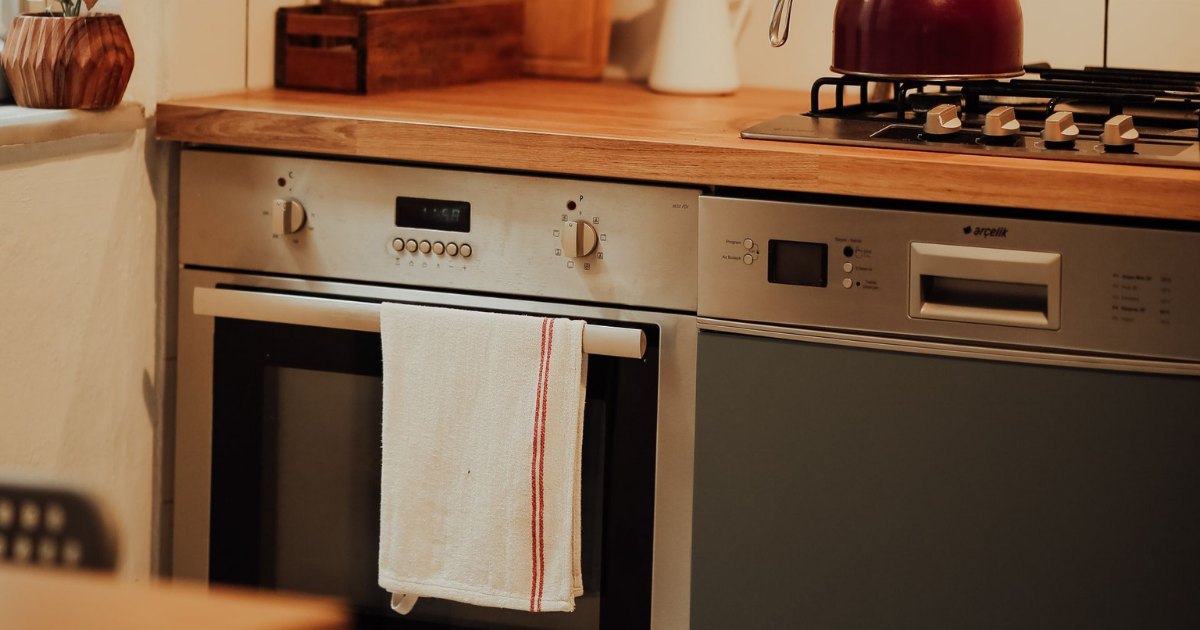
Step 2. Fold and position
Open the door fully to its horizontal broil-stop position. Place one folded washcloth directly over the metal hinge arm on the left side, as close to the oven body as possible. Repeat on the right. The washcloth sits between the hinge arm and the oven’s front frame.
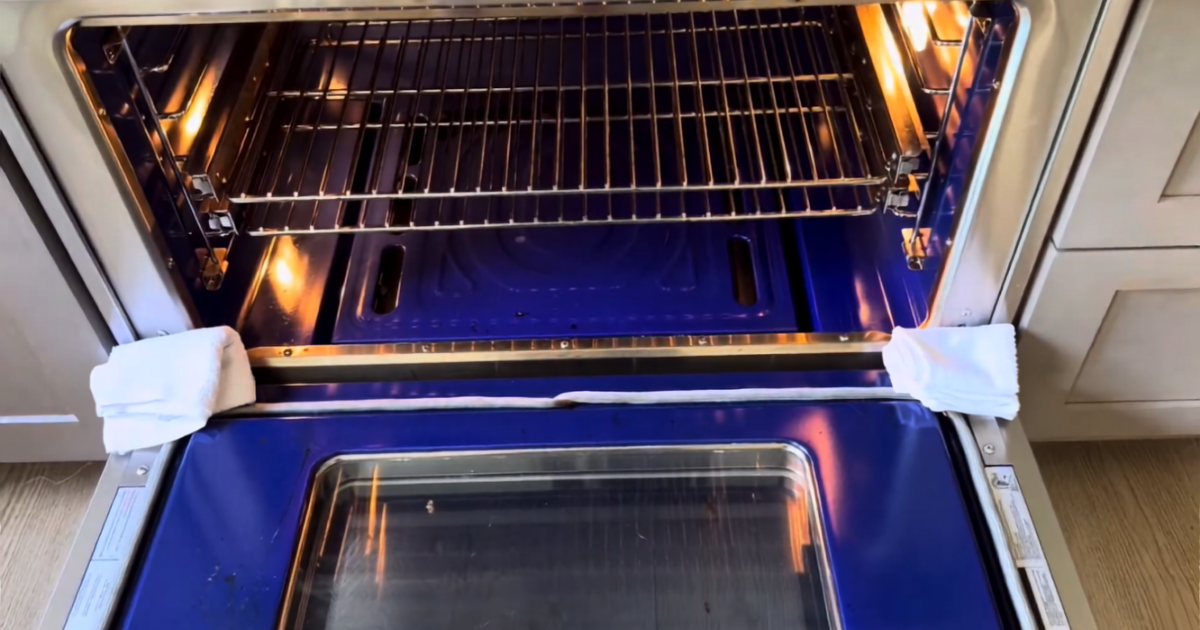
Step 3: Apply Gentle Counter-Leverage
With the door still fully open, press the door slightly beyond its normal open stop, moving it upwards toward the ceiling just a few degrees. The washcloths act as a fulcrum. This pressure forces the internal spring-loaded hinge mechanism to stretch and re-seat into its correct, tight-closing position. Hold steady, firm pressure for 10 seconds.
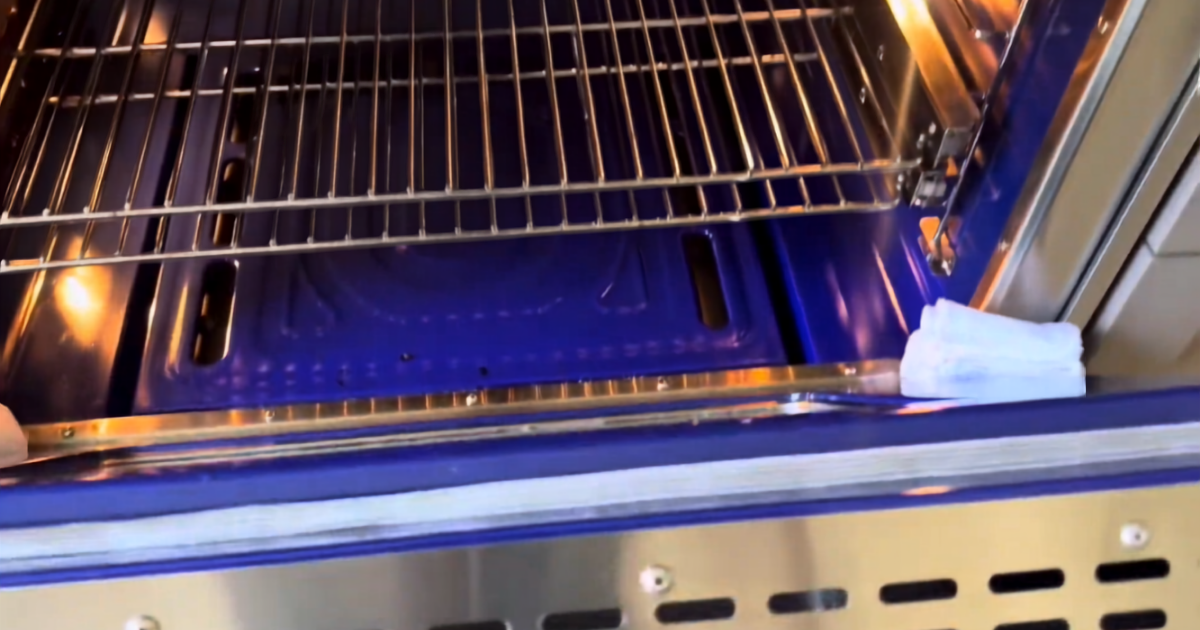
⚠️ Caution: Do not slam or aggressively force the door shut. Excessive force can shatter the tempered glass panel or permanently warp the frame.
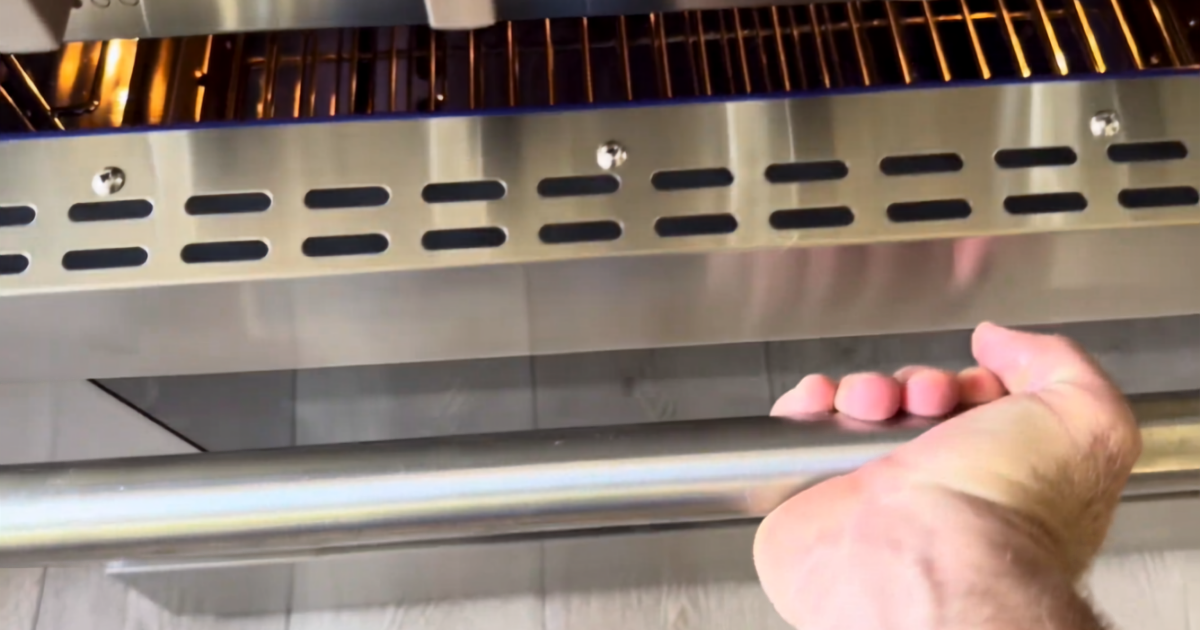
Step 4: Test and Repeat
Remove the washcloths and gently close the door. It should now seal flush against the oven frame. If the gap is smaller but not fully closed, repeat the process once more, adding a little more upward pressure. Never force the door violently.
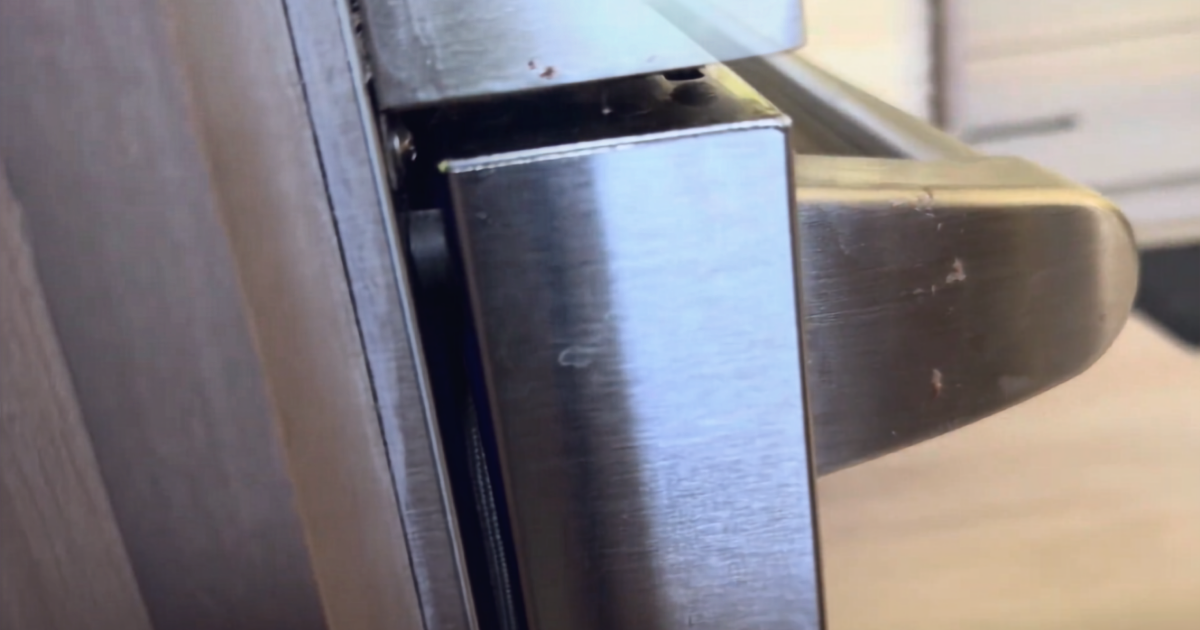
The Science Behind the Hack: Why Does It Work?
It looks almost too simple, but you may want to know how this trick simply works. Let’s explore what is actually happening inside the door.
Spring fatigue vs misalignment
Oven doors take a lot of abuse. People lean on them, bump them with a hip, or set a heavy pan on the open door. Over time, this either pushes the heavy-duty internal springs slightly out of their optimal tension points or bends the hinge arms a touch outward. Either way the door no longer pulls itself snug against the frame, and you get that stubborn gap. Most of the time this is misalignment, not a snapped part, which is exactly why a gentle correction can bring it back.
Fulcrum realignment
The folded washcloth acts as a temporary fulcrum. When you press the door against that soft pivot point, you redirect the force into the hinge mechanism and coax it to stretch back into its original, tightly latched configuration. The pad cushions the glass and metal so you can apply meaningful leverage without scratching, cracking, or over-bending anything. In short, you are resetting the geometry of the hinge rather than repairing it.
If Your Oven Door Won’t Close on a Specific Brand
The washcloth fix is universal, but a few brands have quirks worth knowing before you order parts.
- Westinghouse: A Westinghouse oven door that won’t close properly is very often a simple hinge-seating issue, especially on models where the door lifts off for cleaning. Confirm both hinge arms clicked fully back into their slots before assuming a broken part.
- Frigidaire: Frigidaire doors that won’t close or won’t stay closed commonly trace to fatigued hinge springs. If the washcloth trick helps only briefly, plan on a hinge kit.
- Samsung: Samsung oven doors that won’t close all the way frequently just need reseating after a removal for cleaning. Line up both hinges evenly and press down until each seats.
- Bosch: Bosch hinges use a locking lever near each arm. If the door feels loose, check that both levers are flipped back to the locked position.
- Jenn-Air and KitchenAid: These share a lot of hardware, and a door that won’t stay closed usually points to spring wear rather than alignment.
- Hotpoint and GE: Both often show latch-related closing problems tied to the self-clean cycle. Try the latch reset below before touching the hinges.
- Whirlpool: A Whirlpool door hinge stuck in the locked position after self-clean is common. The power cycle in the latch section usually releases it.
Whatever the brand, the model number label tells you the exact hinge or latch part you need.
What to Do If the Washcloth Hack Doesn’t Work
If the washcloth trick fails to close the gap, your oven is likely dealing with a physical obstruction or a completely broken component rather than a simple alignment issue.
Look for Obstructions (Oven Racks & Seals)
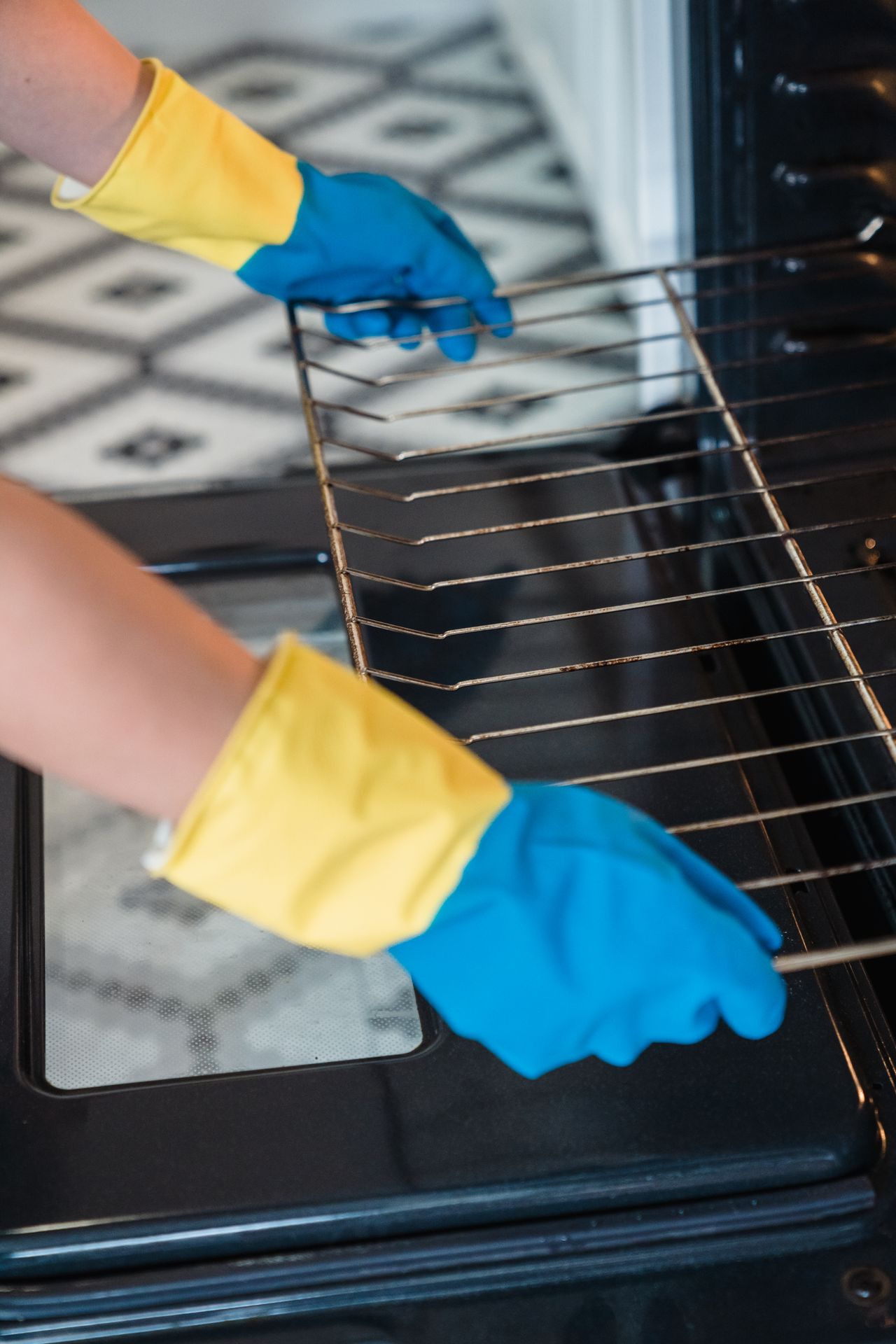
- Misaligned Racks: Sometimes the door is fine, and something is physically blocking it. Even a 1mm protrusion can prevent the door from closing. Pull the oven racks out and check that none of them are pushed in backward or resting crookedly on their supports, since a corner sticking out can hold the door open a fraction of an inch.
- Loose Door Gasket: Inspect the rubberized or fiberglass mesh seal lining the perimeter of the oven opening. Over time, these seals can tear, warp, or slip out of their retaining tracks. If the gasket is loose, gently press it back into its channel using your fingers.
Reset the Self-Cleaning Latch
If you recently ran a self-clean cycle, the automatic motorized door latch may be stuck in the locked position. Unplug the oven or flip the circuit breaker off for exactly 60 seconds, then restore power. This often resets the control board and retracts the latch. Listen for a mechanical click after power-up before attempting to close the door.
Complete hinge replacement
If the door feels entirely loose, swings unevenly, or the washcloth trick gives you zero improvement, the springs have likely snapped or a hinge has failed outright. That is a parts fix rather than an adjustment.
Find your oven’s model number, usually printed on a label along the door frame, on the side of the door itself, or behind a drawer at the bottom. With that number you can order the correct replacement hinge kit for your exact model, since hinges are not universal. Many kits come as a matched pair and are worth replacing together so tension stays even. If you are not comfortable removing the door and swapping hinges yourself, this is a reasonable point to bring in an appliance technician.
Final Thought
A door that will not close is almost always fixable, and it usually starts with something as low-tech as two folded washcloths. 9 out of 10, the washcloth alignment trick will reseat the hinges and get you cooking safely again in under a minute.
Try the leverage trick first, rule out racks, seals, and a stuck self-clean latch next, and treat a hinge kit as the last resort for a spring that has truly given out. Whatever the cause, cool the oven fully before you work on it, and never keep baking with a gaping door, since the wasted energy, uneven results, and burn risk are not worth it.