





If you opened your dishwasher this morning to find a pool of murky, stale water at the bottom, you’re not alone. We’ve seen it in nearly every kind of Bay Area kitchen, from a compact galley in a Sunset District row house to a sleek open-plan remodel in Walnut Creek. A dishwasher that won’t drain stops your entire kitchen rhythm and brings up that nagging worry: Is this going to be an expensive repair?
Before you panic and call a plumber, try these five DIY fixes, ordered from quickest to most involved. Most standing water problems in San Francisco and East Bay homes are surprisingly simple to solve with nothing more than a sponge and 15 minutes.
Before You Start, Safety and Damage Control
It is tempting to skip the prep and go straight for the fix, but two quick steps here save you from a shock, a flooded floor, or a cut hand. Sixty seconds now keeps this from turning into a bigger mess.
1. Cut the Power
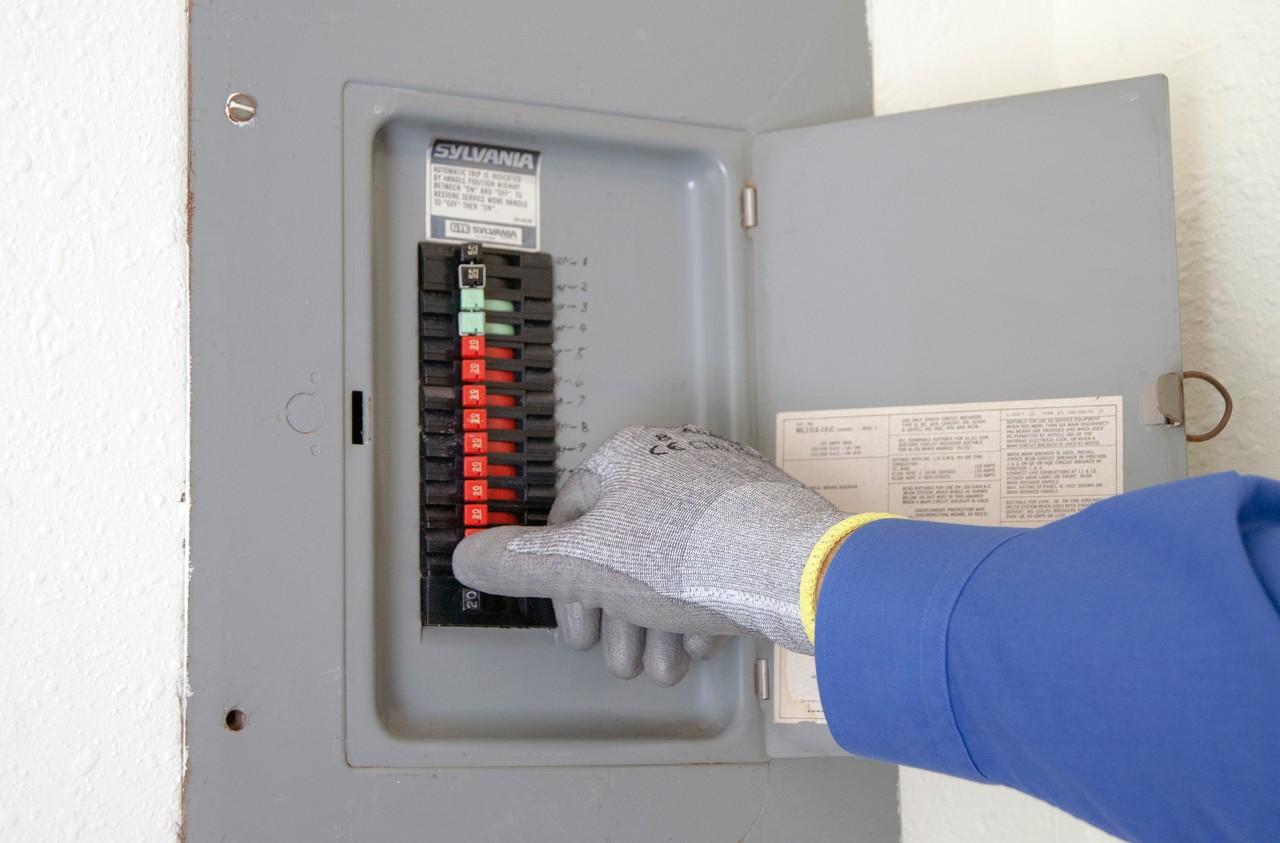
No matter how cramped your under-sink cabinet is (and if you live in a 1920s Pacific Heights apartment, you know the struggle), start with safety. Unplug the dishwasher if you can reach the outlet (often behind the toe kick or under the sink).
If the plug is buried in a typical San Francisco dead-front kitchen, flip the dishwasher’s circuit breaker off at the panel. In many older SF homes, the dishwasher shares a circuit with the garbage disposal; label both if they’re not marked.
2. Bail Out the Water
You cannot diagnose anything with the tub full, so get that water out first. Scoop it into a bucket with a plastic cup or a measuring cup, then soak up the last inch with old towels or a wet rag. It will smell like old food, which is normal. Lay a towel on the floor in front of the dishwasher while you work, because a little spillage is almost guaranteed and it protects your kitchen floor.
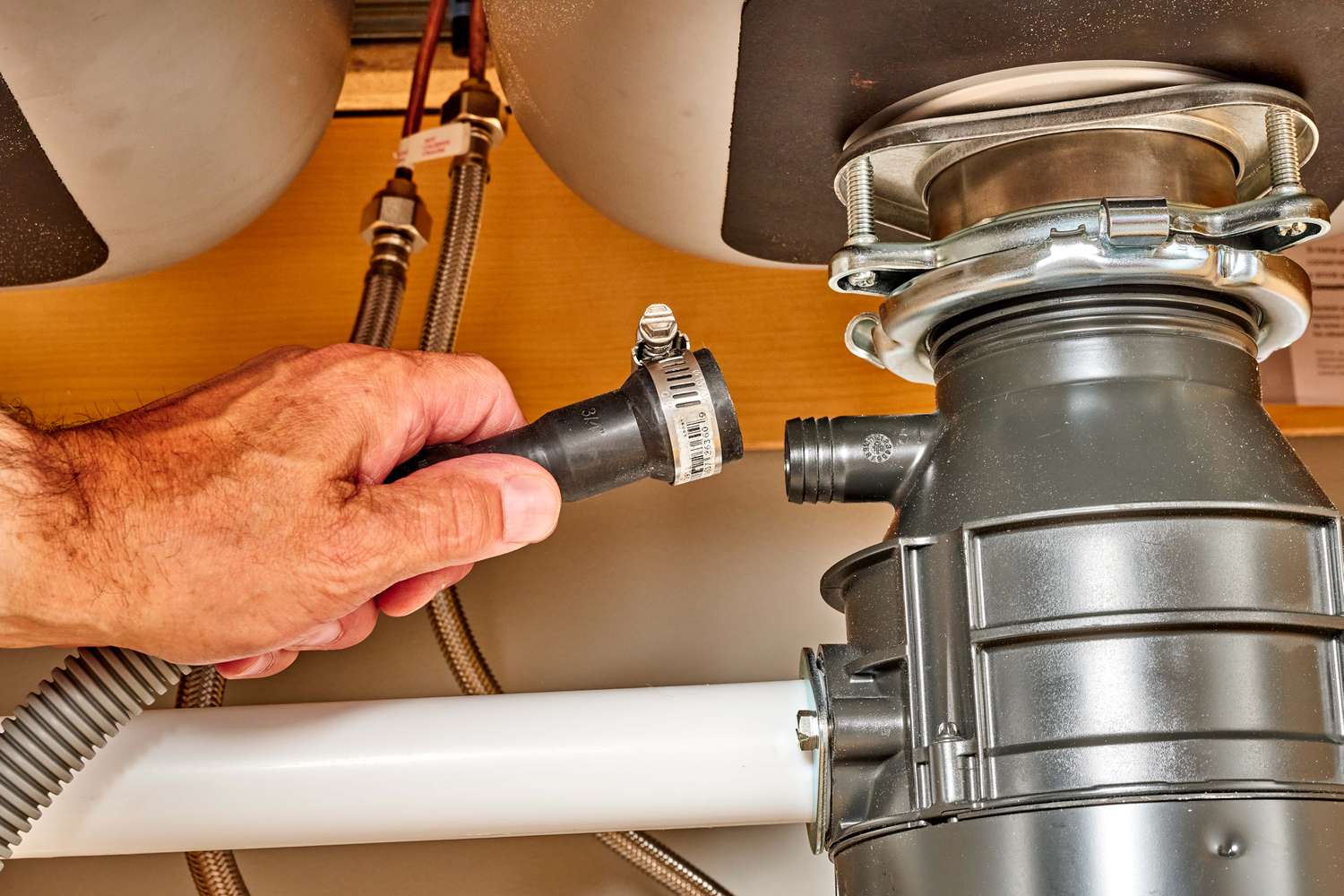
Fix #1. Run the Garbage Disposal (The 10-Second Fix)
In nearly every Bay Area home, the dishwasher drain line connects to the garbage disposal under the sink. If your disposal chamber is packed with potato peels from last night’s dinner or coffee grounds, the dishwasher has nowhere to send its water.
Turn on the tap, run the disposal for about 15 seconds until it sounds clear, then shut it off. Now run a short rinse cycle on the dishwasher and watch. If the water drains, you are done. This alone solves a surprising number of “broken” dishwashers.
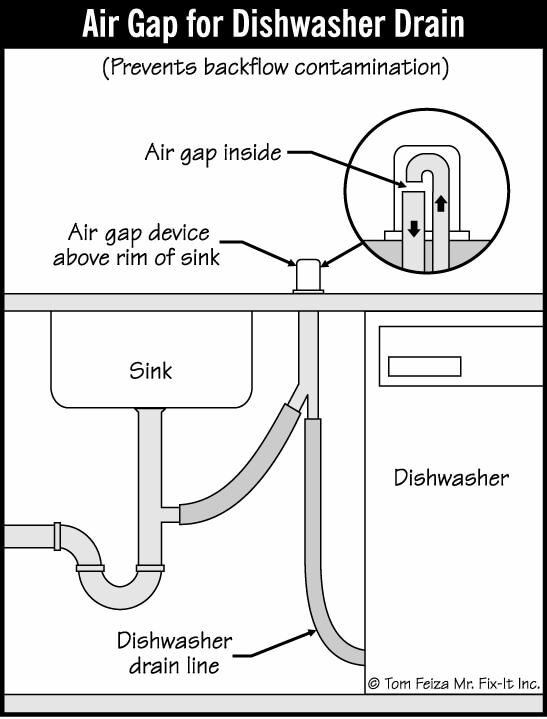
Fix #2. Clean the Air Gap (The 60-Second Fix)
If your sink has a small chrome or plastic cylinder next to the faucet, that’s the air gap, and it’s required by California plumbing code (Section 807.4) to prevent dirty sink water from siphoning back into your dishwasher.
California is one of the states that actually requires an air gap by law under the state plumbing code, so your Bay Area kitchen almost certainly has one, even if you never noticed it. That is different from a lot of the country, where they are optional. If you own a Bosch or a Miele, you might have a built-in air gap inside the machine instead, in which case you can skip this step.
To clean it, twist off the chrome cap and lift out the plastic cover underneath. Look inside for a wad of food gunk. Clear it out with a bottle brush, a pair of tweezers, or a blast from the sink sprayer. Snap it back together and test a rinse cycle. A clogged air gap is one of the most common reasons a dishwasher backs up, so do not skip it.
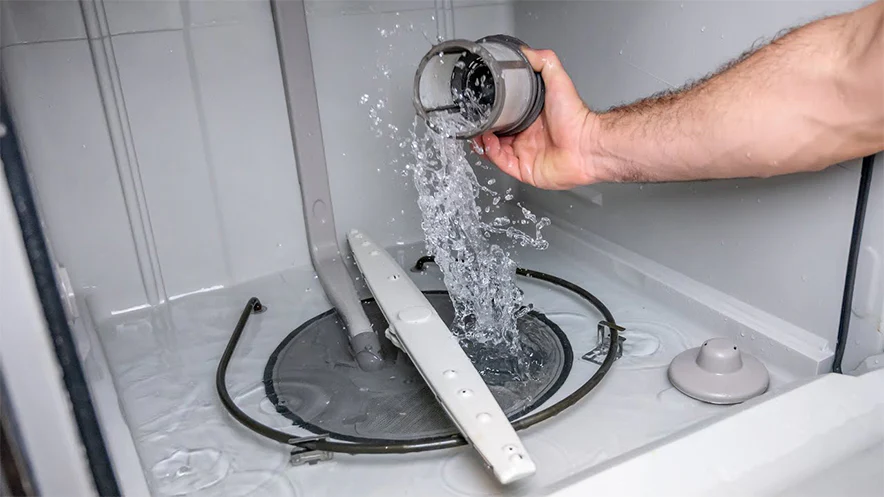
Fix #3. Remove and Clean the Dishwasher Filter (The Most Common Cause)
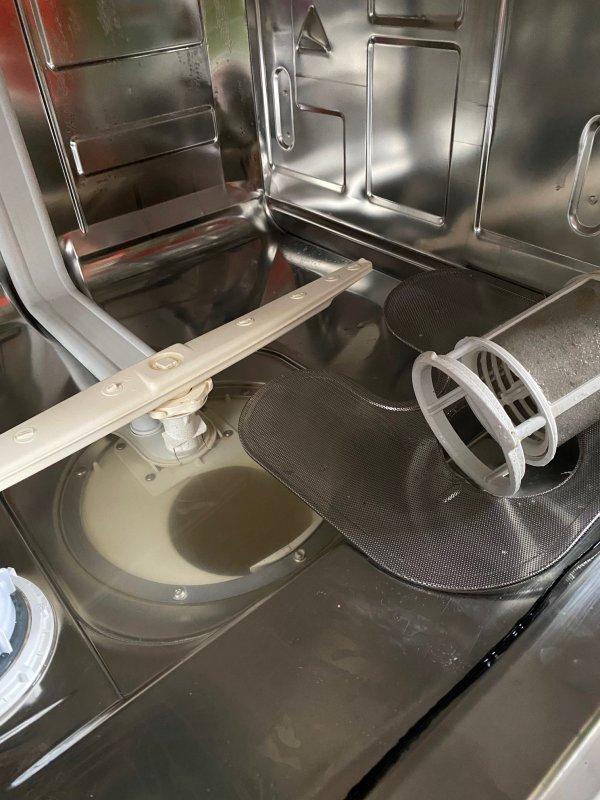
If the first two fixes did not do it, the filter is your prime suspect. This is the single most common reason a dishwasher stops draining, and cleaning it costs you nothing. Whether you have a Bosch 300 series in a SoMa loft or a reliable old Whirlpool in a Berkeley Craftsman, a clogged filter stops water from reaching the pump.
Pull out the bottom rack and look at the floor of the tub, dead center. You will see a round filter, usually a cylinder sitting inside a flat mesh screen. On most models you unlock it with a quarter turn counterclockwise, then lift it straight up. If it has not been cleaned in a while, brace yourself, because it will be coated in a slimy layer of grease and food.
Wash it in the sink with warm soapy water and an old toothbrush until the mesh is clear again. Here is where our local water actually matters. San Francisco tap water comes down from the Hetch Hetchy Reservoir in the Sierra and it is famously soft, which means the buildup on your filter is almost always grease and food gunk rather than the chalky white mineral scale that plagues dishwashers in hard-water regions. The East Bay on EBMUD water and Marin run a touch harder, but still soft by national standards. So scrub for the grease, not the limescale.
One safety note before you reassemble. Reach into the sump hole where the filter sits and feel around, gently, for broken glass, chips of bone, or hard debris. Broken glass down there is common and it will slice your fingers or wreck the pump if you leave it. Once it is clear, drop the filter back in and lock it with a quarter turn clockwise.
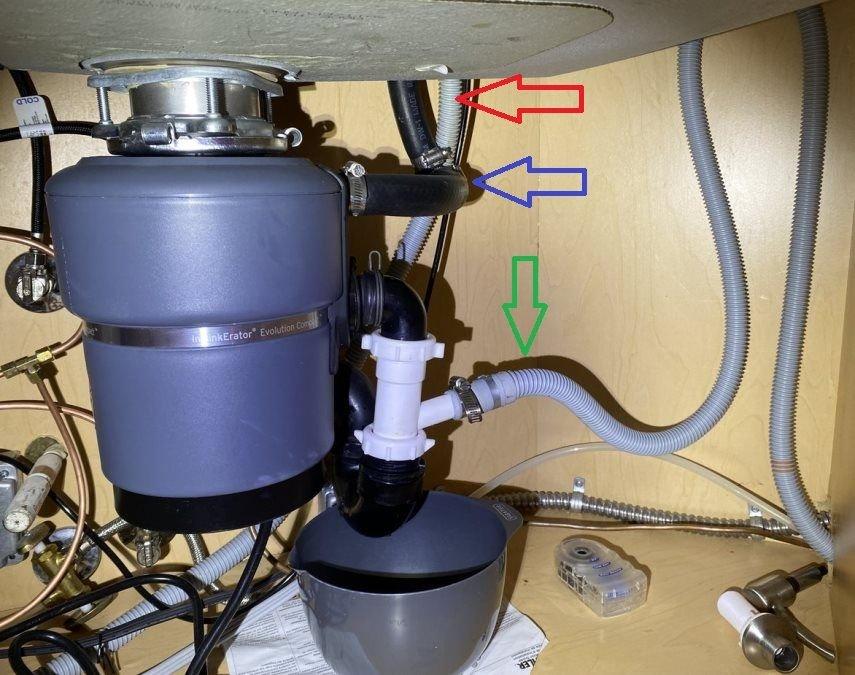
Fix #4. Inspect the Drain Hose Under the Sink
Still pooling? Time to look under the sink. Open the cabinet and find the ribbed plastic drain hose running from the dishwasher over to the disposal or the drain plumbing. Two things go wrong here.
First, look for a kink or a crushed spot. This happens a lot when someone shoves cleaning supplies, a bucket, or a bag of dog food under the sink and bends the hose without realizing it. Straighten it out and test.
Second, the connection can clog where the hose meets the disposal. Keep a bucket and towels right under the joint, because water will come out. Loosen the clamp, pull the hose off, and check both the end of the hose and the fitting on the disposal for a plug of gunk. Clear it, reconnect it snugly, and run a cycle.
Fix #5. Examine the Drain Pump (The Point Where Many Should Stop)
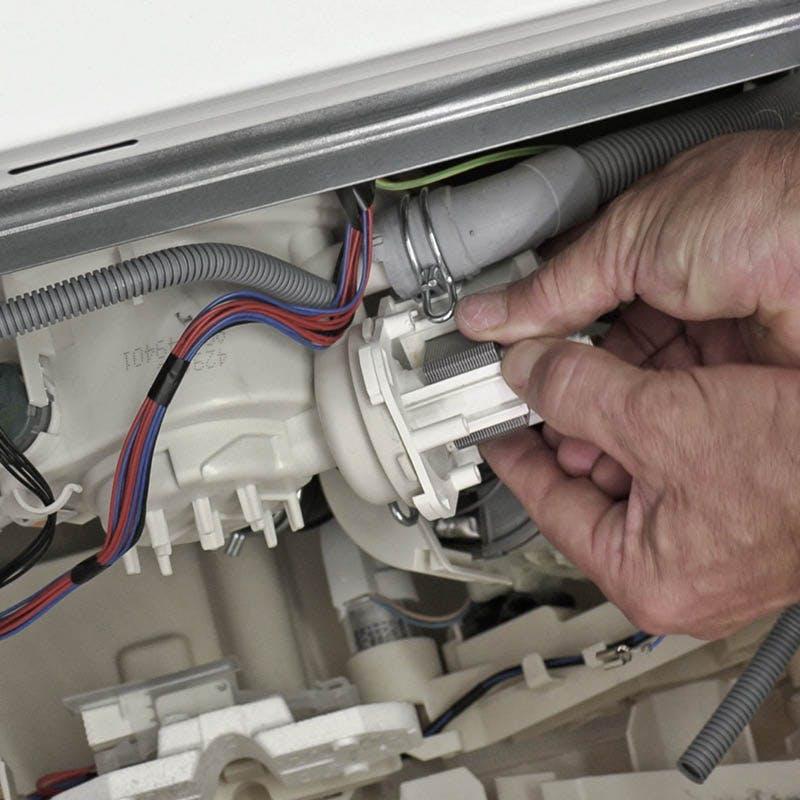
If the disposal, air gap, filter, and hose are all clear and you still have standing water, the problem is likely the drain pump. The pump is the little motor that physically pushes water out of the machine. When it fails or gets jammed, everything upstream can be spotless and the water still will not move.
The telltale sign is sound. If you hear a loud hum or a buzzing with no water actually draining, the pump is trying to run but cannot do its job, often because it is jammed or the motor is going. Some folks are comfortable pulling the lower panel to check the pump for a stuck bit of glass or debris. For most people, though, this is the honest end of the DIY road. You are into disassembly, electrical connections, and parts that are easy to damage, so there is no shame in stopping here.
When to Give Up and Call a Pro
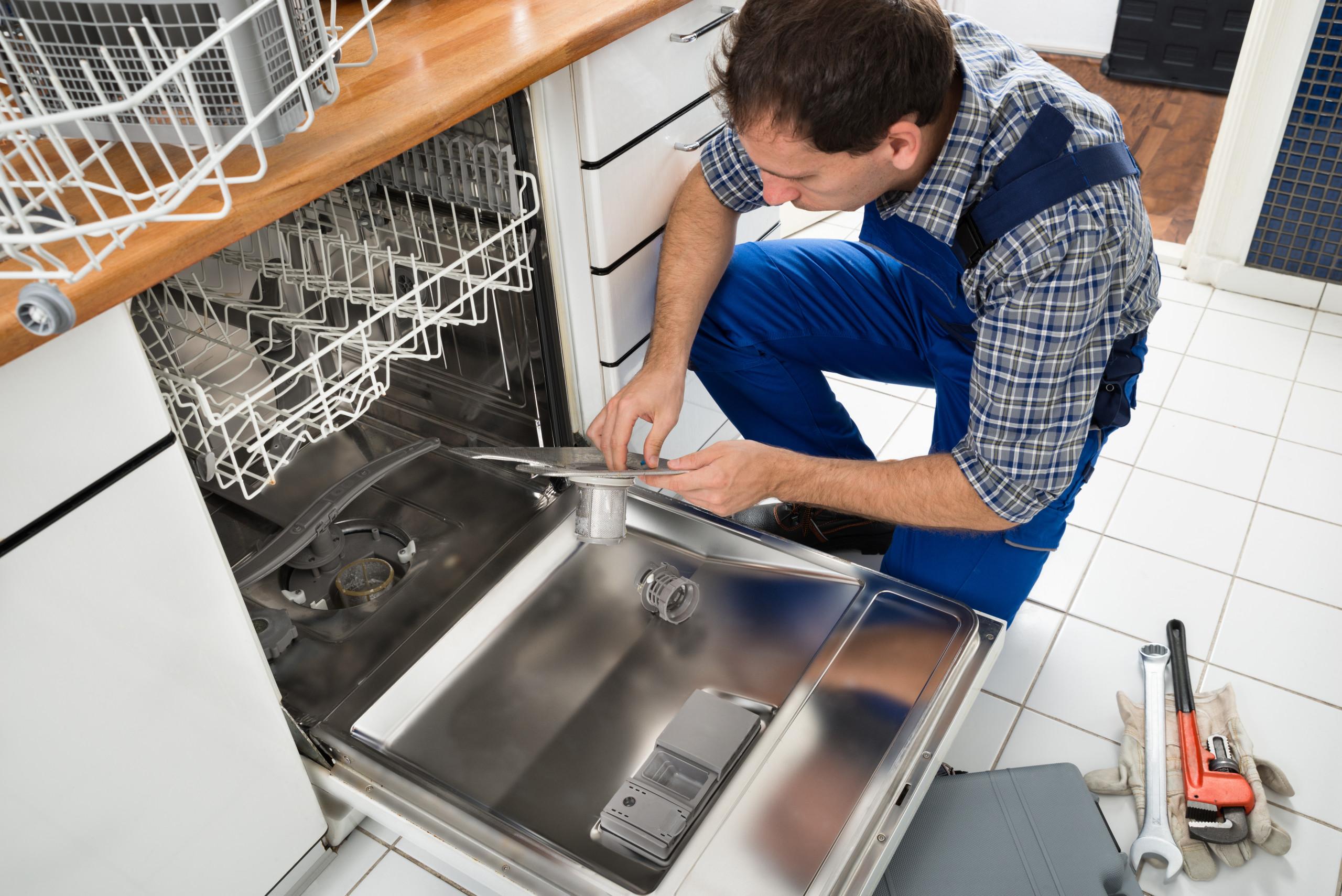
Knowing when to quit saves you money and a headache. Call an appliance repair tech if any of these are true. Service call costs in San Francisco, Oakland, and the Peninsula typically run $100–$200 to diagnose, with most drain pump repairs totaling $250–$400 parts and labor. That’s still far cheaper than a new installation in a tight city kitchen where floor and cabinet modifications can spiral quickly.
A local technician who understands Bay Area building quirks (the prevalence of air gaps, earthquake shut-off valve locations, and the compact under-sink layouts in older Victorians) will have you sorted fast.
How to Prevent It From Happening Again
A few small habits keep you from ever bailing out that gray water again.
Scrape your plates into the compost bin before loading, since heavy food scraps are what clog the filter and pump in the first place. Pull and rinse the filter about once a month, which takes two minutes and prevents the most common failure entirely. Run the hot tap at your sink for a few seconds before starting a cycle, so the dishwasher fills with hot water from the start and cuts grease better. And run your garbage disposal before you start the dishwasher, so the drain path is clear from the get-go.
Bookmark this page for the next time, keep those four habits, and your dishwasher should keep draining clean for years.