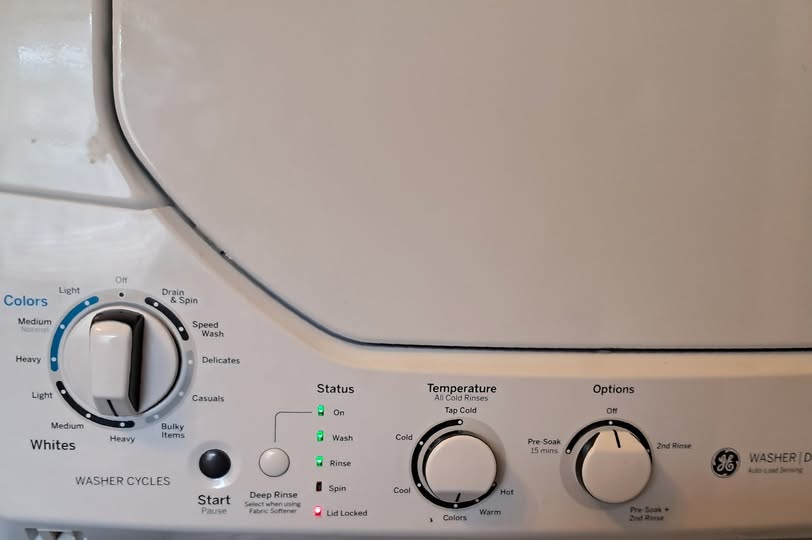






A washing machine not spinning is one of the most frustrating appliance problems a homeowner faces. You open the door expecting clean, damp clothes and instead find soaking wet laundry sitting in a pool of water. Whether your washer won’t spin at all, stops mid-cycle, or runs but leaves clothes dripping, this comprehensive guide covers everything you need to know.
This guide explains why a washing machine won’t spin, breaks down caused by machine type (front load vs. top load), covers what happens when your washing machine is not spinning but the motor is running, shows you how to fix a washing machine that won’t spin, and helps you decide when it’s time to call a professional.
Key Takeaways
Washer type matters: Top loaders fail at the lid switch or coupler; front loaders fail at the door lock or drain pump.
Motor running, drum still: Almost always a mechanical fault — broken belt, worn coupler, or damaged transmission.
Drain first, spin second: If the machine holds water, fix the drain before diagnosing the spin.
DIY is realistic: Lid switches, door locks, belts, and drain filters are all fixable at home in under two hours.
Call a professional for: Failed motors, broken transmissions, or burned motor control boards.
Prevent with maintenance: Balance loads, clean the drain filter regularly, and use the correct detergent.
Understanding Washer Drum Types: Top Load vs. Front Load
Before diagnosing why your washer isn’t spinning, you need to understand how your machine works. The drum type determines the spin mechanism, the failure modes, and the right repair approach.
1. Top Load Washing Machines
Top load washers use a vertical drum. Clothes load from the top and are cleaned using either a central agitator (a tall spindle that moves clothes back and forth) or an impeller (a low-profile disc that creates turbulent water flow). The drum spins on a vertical axis to extract water during the spin cycle.
Top load machines are generally simpler mechanically, but they rely heavily on the lid switch to authorize the spin cycle. If the lid switch fails, the washer will not spin — even if everything else works perfectly. Models like the Speed Queen washer are known for their durable top-load agitator designs.
2. Front Load Washing Machines
Front load washers use a horizontal drum. Clothes tumble through a small amount of water as the drum rotates on a horizontal axis. This tumbling action is more gentle on fabrics and achieves higher spin speeds — often 1,000 to 1,400 RPM compared to 700–900 RPM for top loaders — extracting more water per cycle.
Front load machines depend on a door lock (also called a door latch or door interlock) to authorize the spin cycle. A faulty door lock will prevent spinning entirely. Front loaders are also more prone to drain pump clogs and rubber door seal issues.
Top Load vs. Front Load: Quick Comparison
| Top Load Washer | Front Load Washer |
|---|---|
| Vertical drum (clothes drop in from top) | Horizontal drum (tumble action) |
| Agitator or impeller spins clothes | Drum rotates on a horizontal axis |
| More prone to lid switch issues | More prone to door lock issues |
| Easier to add clothes mid-cycle | Better energy and water efficiency |
| Spin speed: ~700–900 RPM | Spin speed: ~1,000–1,400 RPM |
Why Is My Washing Machine Not Spinning? Caused by Washer Type
The root causes of a washer not spinning differ between top load and front load machines. Understanding which type you own helps you target the right fix immediately.
Top Load Washer: Common Causes of No Spin
1. Faulty Lid Switch

The lid switch is the single most common reason a top load washing machine will not spin. This small plastic switch sits under the lid. When you close the lid, a plastic tab presses the switch, signaling the machine it is safe to spin. If the switch breaks or wears out, the washer thinks the lid is open and refuses to spin. You can usually hear a click when pressing the switch manually, no click means a failed switch.
2. Worn or Broken Drive Belt
Belt-driven top load washers use a rubber belt connecting the motor pulley to the drum. Over time, the belt stretches, slips, or snaps. A broken belt means the motor runs, you hear it humming, but the drum does not move. This is a very common reason your washing machine is not spinning but the motor is running.
3. Broken Motor Coupler (Direct Drive Washers)
Direct drive top load washers (common in older Whirlpool, Maytag, and Kenmore models) use a small rubber or plastic coupler between the motor and transmission. This coupler is designed to break under stress to protect the motor. When it fails, the motor spins freely but the drum does not move.
4. Transmission Failure
The transmission in a top load washer switches between the agitate and spin modes. A worn or damaged transmission can prevent the drum from spinning even when the motor and coupler are fine. Transmission replacement is complex and often makes replacing the washer a better financial decision.
5. Overloading
Stuffing too many clothes into a top load washer creates an unbalanced load. The machine’s safety systems detect the imbalance and stop or refuse to spin to prevent damage. Redistributing the load and running a smaller cycle usually resolves this immediately.
6. Faulty Timer or Control Knob
Older top load washers with mechanical timers use a rotating knob to advance through wash cycles. A worn timer may skip the spin cycle or fail to engage it. Testing the timer with a multimeter for continuity identifies whether it needs replacement.
Front Load Washer: Common Causes of No Spin
1. Faulty Door Lock / Door Latch
The door lock on a front load washer serves the same safety function as the lid switch on a top loader. If the door lock does not engage properly, due to a broken latch, worn strike, or failed electronic interlock, the washer will not spin. You may see an error code like dL, F34, or E1 on the display. This is the most common reason a front load washing machine won’t spin.
2. Clogged Drain Pump or Drain Hose
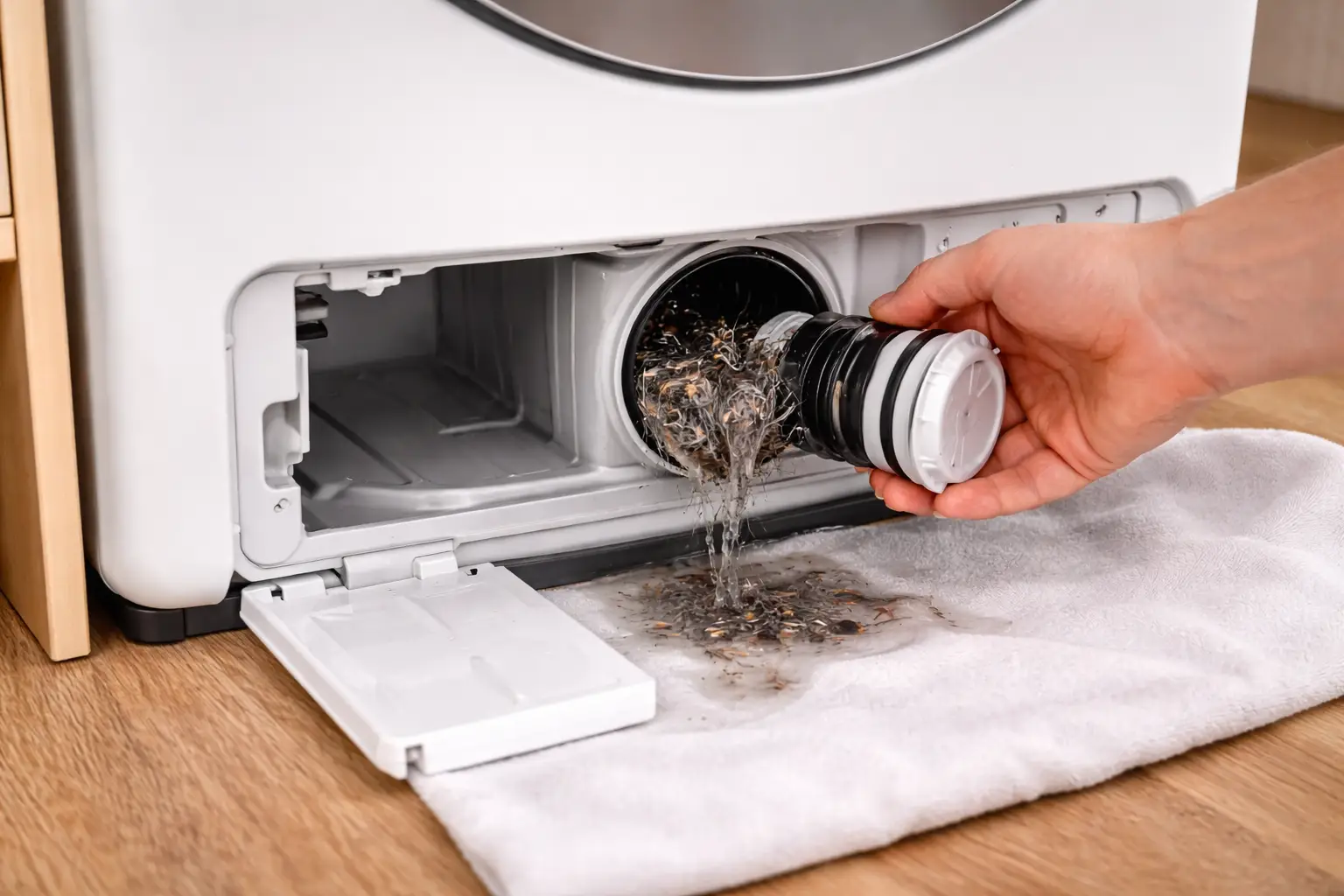
Front load washers will not begin the spin cycle if they cannot drain the water first. A clogged drain pump filter (usually located at the bottom front of the machine behind a small panel) or a kinked or blocked drain hose prevents drainage. The machine may stop mid-cycle with water still inside. Cleaning the filter every 3 to 6 months prevents this issue.
3. Worn Drive Belt
Front load washers also use drive belts, though they tend to be more robust than those in top loaders. A slipped or broken belt causes the drum to stop spinning while the motor continues to run, another key scenario where the washing machine is not spinning but the motor is running.
4. Shock Absorber or Suspension Rod Failure
Front loaders use shock absorbers to dampen drum movement during spinning. Worn or broken shock absorbers cause the drum to bang violently, triggering safety shutoffs mid-cycle. If your washer bangs loudly and stops spinning, check the shock absorbers.
5. Faulty Motor Control Board
The motor control board regulates power delivery to the motor. A burned component, blown capacitor, or software fault on the board can prevent spin signals from reaching the motor. You may see burn marks or hear clicking from the board area. This repair typically requires professional help or board replacement.
Washing Machine Not Spinning but Motor Running: What Does It Mean?

When your washing machine is not spinning but the motor is running, you can hear the motor humming or buzzing, it almost always means the problem is mechanical, not electrical. The motor receives power and operates, but something between the motor and the drum has failed.
Here are the most likely causes when the motor runs but the drum does not spin:
- Broken drive belt: The motor spins the pulley, but the belt that connects it to the drum has snapped. The motor hums, the drum sits still.
- Worn motor coupler: The rubber coupler between the motor shaft and transmission has cracked or broken. The motor runs freely with no load.
- Clutch assembly failure (top loaders): The clutch allows the drum to gradually reach full spin speed. A worn clutch means the drum slips and never accelerates to full spin.
- Transmission failure: The gear mechanism inside the transmission no longer shifts into spin mode even though the motor is operating normally.
- Seized drum bearing: A worn drum bearing creates so much friction the motor cannot overcome the resistance and the drum barely moves or groans loudly.
🔍 Quick Diagnostic Tip
If you hear the motor running but the drum is completely still, start by checking the drive belt. Remove the back panel (or front panel on front loaders) and look for a snapped or dislodged belt. This is the most common and cheapest cause of motor running/drum not spinning.
Problems That Occur When a Washer Won’t Spin
A washing machine that does not spin does more than leave clothes wet. Ignoring the problem leads to a chain of secondary issues that can damage your appliance, your home, and your laundry.
- Soaking wet clothes: Without spinning, clothes retain most of the wash water and are too heavy and wet to transfer to a dryer efficiently.
- Extended drying times and higher energy bills: Dryers work much harder and longer on clothes that have not been spun, dramatically increasing electricity costs.
- Mold and mildew growth: Water sitting in the drum and on wet laundry for extended periods creates ideal conditions for mold, especially in front load washers.
- Motor overheating: A motor struggling against a mechanical fault (like a seized bearing or locked drum) can overheat and burn out entirely — turning a simple repair into a costly one.
- Water damage risk: A blocked drain combined with a non-spinning drum can allow water to overflow or leak, potentially damaging floors and cabinets.
- Detergent residue buildup: Clothes left in standing water with detergent can develop soap residue, stiffness, and odor.
How to Fix a Washing Machine That Won’t Spin: Step-by-Step DIY Repairs
Many washing machines, not spinning repair jobs, are DIY-friendly with basic tools. Always unplug the washer before opening any panels or touching internal components. Work on a flat, stable surface and keep a towel nearby for water spills.
Tools you may need: multimeter, Phillips and flathead screwdrivers, nut driver set, needle-nose pliers, contact cleaner spray.
Fix 1: Check and Replace the Lid Switch (Top Load Washers)
Applies to: Top load washers. Difficulty: Easy. Estimated time: 30–60 minutes.
- Unplug the washing machine from the power outlet.
- Lift the lid and locate the lid switch — it sits in the frame beneath the lid, typically near the back.
- Press the switch manually with a pen or your finger. You should hear a click. No click = failed switch.
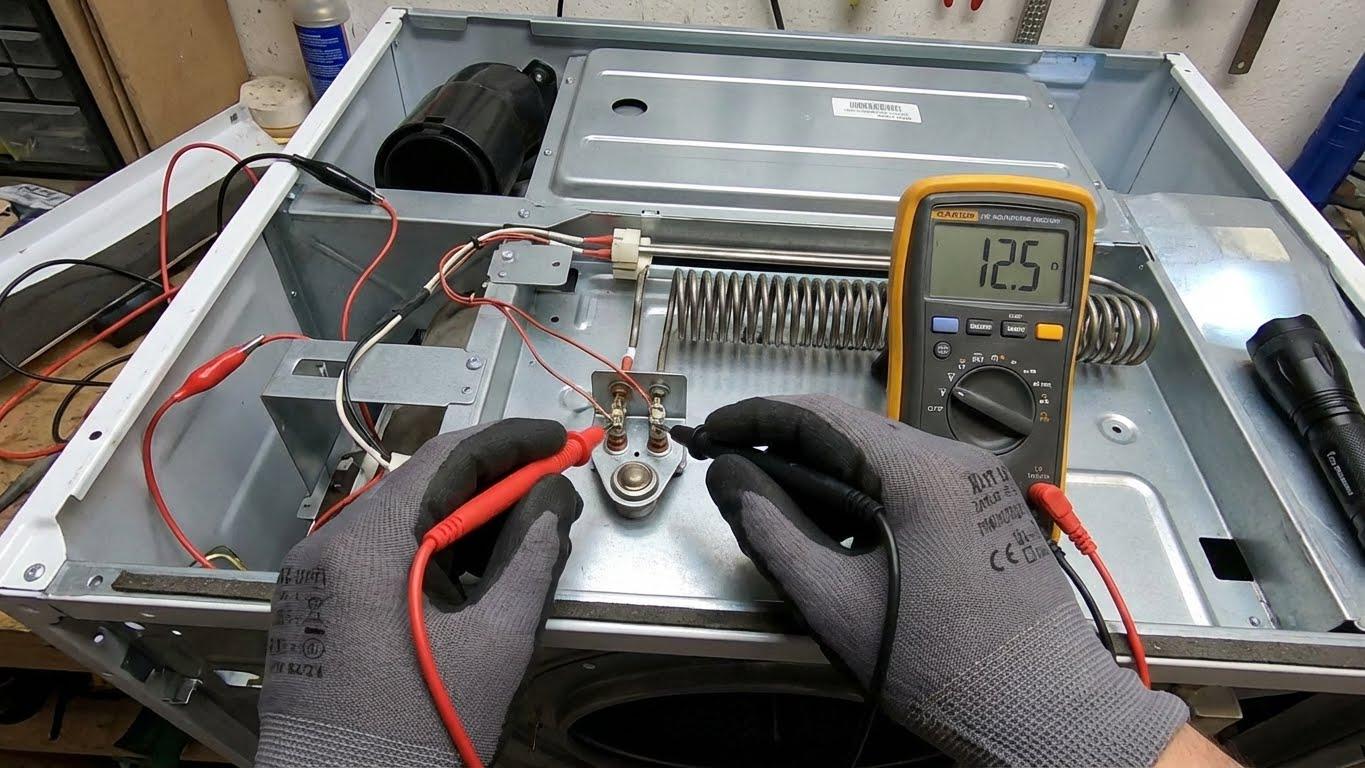
- Use a multimeter set to continuity mode. Touch probes to the switch terminals. With the switch pressed, it should show continuity. Open switch = no continuity. If it fails this test, replace it.
- Remove the two or three screws holding the switch in place. Disconnect the wiring harness.
- Install the new switch, reconnect the harness, and reassemble.
- Plug in and test with a spin cycle.
Fix 2: Inspect and Replace the Drive Belt

Applies to: Top load and front load belt-driven washers. Difficulty: Easy to Medium. Estimated time: 45–90 minutes.
- Unplug the washer and remove the rear access panel (top loaders) or front panel (most front loaders).
- Locate the drive belt. It wraps around the motor pulley and the drum pulley.
- Inspect the belt for cracks, fraying, excessive slack, or complete breakage.
- To remove the old belt, slip it off the smaller motor pulley first, then work it off the drum pulley.
- Route the new belt around the drum pulley first, then stretch it over the motor pulley while rotating the drum slowly.
- Ensure the belt sits in the center groove of both pulleys with even tension.
- Reassemble and run a test cycle.
Fix 3: Replace the Motor Coupler (Direct Drive Top Loaders)
Applies to: Direct drive top load washers (Whirlpool, Maytag, Kenmore). Difficulty: Medium. Estimated time: 60–90 minutes.
- Unplug the washer and remove the back panel.
- Disconnect the motor wiring harness and unmount the motor from its bracket.
- Locate the three-piece motor coupler between the motor shaft and transmission input shaft.
- Inspect for cracked rubber or broken plastic drive forks.
- Pry off the old coupler pieces. Install the new coupler — one plastic piece on the motor shaft, one on the transmission shaft, rubber disc sandwiched between them.
- Remount the motor, reconnect wiring, and reassemble the panel.
- Test the spin cycle.
Fix 4: Clean the Drain Pump and Hose (Front and Top Loaders)
Applies to: All washer types, especially front loaders. Difficulty: Easy. Estimated time: 20–40 minutes.
- Place towels on the floor. Unplug the washer and turn off the water supply.
- For front loaders: open the small access panel at the bottom front. Place a shallow pan under the drain filter cap and unscrew it slowly — water will pour out.
- Remove the filter completely and clear all lint, coins, hair clips, and debris.
- Inspect the drain hose at the back of the machine. Disconnect it and run water through it to confirm it flows freely.
- Reattach the filter and hose securely. Run a short cycle and check for leaks.
Fix 5: Replace the Door Lock Assembly (Front Load Washers)
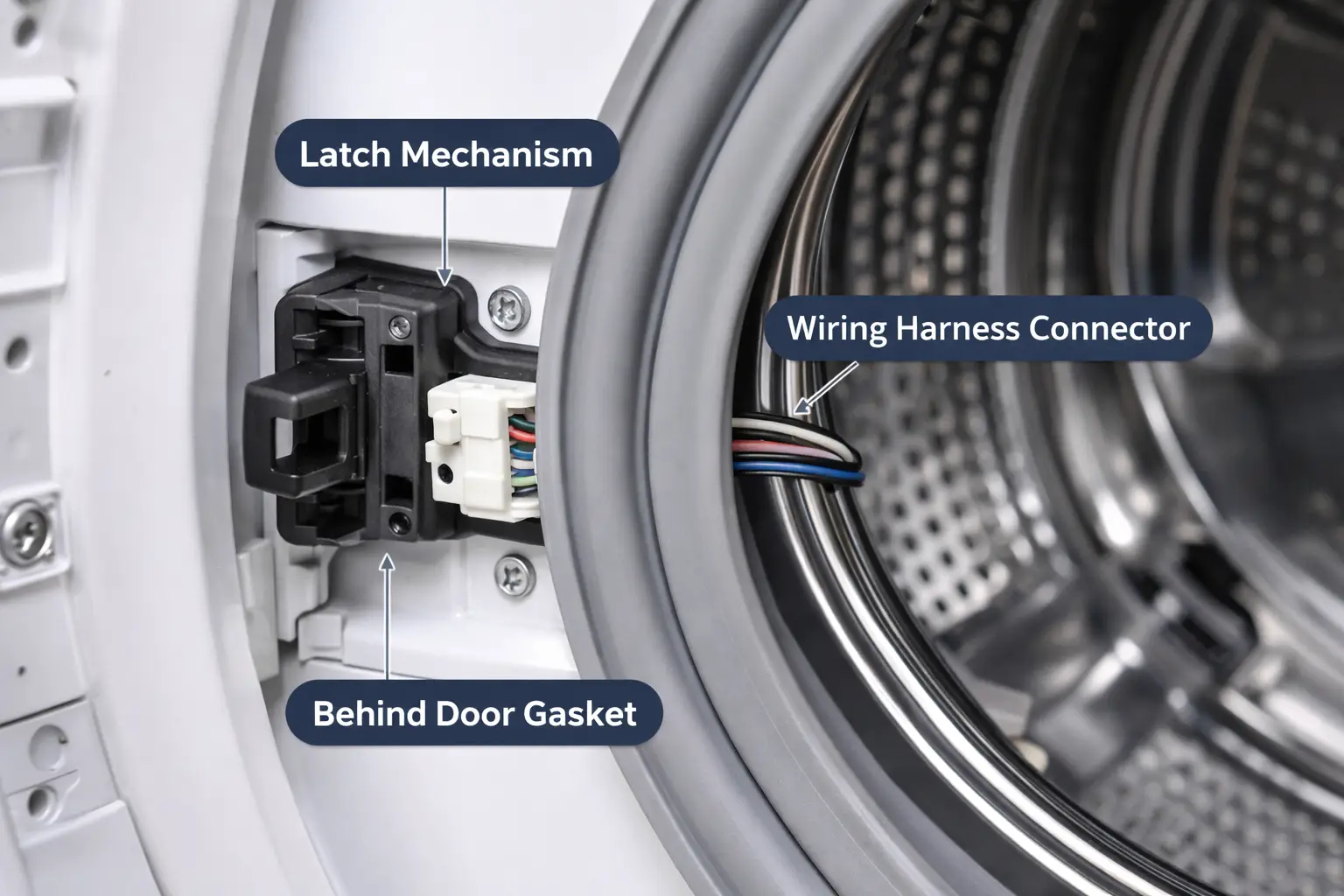
Applies to: Front load washers. Difficulty: Easy to Medium. Estimated time: 30–60 minutes.
- Unplug the machine. Open the door wide.
- Peel back the rubber door gasket around the door opening to expose the door lock housing screws.
- Remove the screws and pull the door lock assembly through the front of the machine.
- Disconnect the wiring harness connectors.
- Connect the new door lock assembly, position it in the opening, and secure the screws.
- Press the door gasket back into the retaining groove.
- Plug in and test — the door should lock firmly and the spin cycle should engage.
Fix 6: Inspect and Fix Loose Wiring or Corroded Connections
Applies to: All washer types. Difficulty: Easy. Estimated time: 30–45 minutes.
- Unplug the machine and remove the rear panel.
- Trace wiring from the motor, control board, lid switch or door lock to the main harness.
- Look for melted insulation, corroded terminals (green or white buildup), or visibly loose connectors.
- Clean corroded contacts with electrical contact cleaner and a small wire brush.
- Press any loose connectors firmly back onto their terminals.
- Reassemble and test.
Fix 7: Replace the Motor Control Board
Applies to: All electronic washers. Difficulty: Medium to Hard. Estimated time: 60–120 minutes.
- Unplug the washer and locate the control board usually behind the top panel or rear panel.
- Photograph all wiring connections before disconnecting anything.
- Inspect the board for burn marks, blown capacitors (bulging tops), or scorched areas.
- Disconnect all harnesses and remove the board mounting screws.
- Install the new board, reconnect all harnesses in the same positions (refer to your photos), and secure mounting screws.
- Reassemble the panel and run a full test cycle.
Fix 8: Avoid Overloading and Rebalance the Load
If your washing machine won’t spin and you hear banging or a pause mid-cycle, overloading or an unbalanced load is likely the cause.
- Stop the cycle and open the lid or door.
- Remove some items and redistribute the remaining load evenly around the drum.
- Never wash single heavy items alone add a few towels to balance the load.
- Follow the manufacturer’s maximum load capacity listed inside the lid or in the user manual.
- Restart the spin-only cycle.
When to Call a Professional for Washing Machine Repair
DIY repairs solve most spin issues. However, some faults require professional expertise, specialized tools, and replacement parts that are not practical for homeowners to source or install safely.
Call a technician if you encounter any of the following:
- The motor is completely burned out — motors require safe handling, correct specifications, and often calibration after installation.
- The transmission is damaged — transmission replacement is labor-intensive and can cost nearly as much as a new washer on older machines.
- The motor control board is fried — if you see multiple burn marks or smell something burning, a technician should assess whether the board damage has spread.
- Error codes persist after basic repairs — modern washers store fault codes that a technician can read with a diagnostic tool to pinpoint the exact fault.
- Your WDS549V8RZ washing machine won’t spin — or other model-specific faults where proprietary parts or calibration tools are needed for accurate repair.
| 🔧 Need a Professional Repair? If your washing machine won’t spin after trying these fixes, our expert technicians are ready to help. We service all brands and models: top load, front load, and everything in between.👉 Visit our Washing Machine Repair page to schedule a same-day or next-day service appointment. |
Preventive Maintenance Tips to Avoid Spin Problems

Regular care keeps your washer spinning smoothly and extends its lifespan by years. Follow these practical maintenance habits:
1. Balance Every Load Properly
Distribute laundry evenly around the drum before starting a cycle. Mix large and small items. Avoid washing single heavy items — always add smaller pieces to create a balanced load. Unbalanced loads are the leading cause of spin cycle interruptions and long-term suspension damage.
2. Clean the Drain Filter Every 3 to 6 Months
Front load washers collect lint, hair, and small objects in the pump filter. Top load washers accumulate debris in the pump housing. Clean these components regularly to keep drainage fast and prevent the machine from refusing to spin.
3. Never Overload the Drum
Follow your washer’s rated load capacity. A rough guide: the drum should be no more than three-quarters full. Overloading strains the motor, transmission, and suspension components every cycle, accelerating wear.
4. Inspect the Drive Belt Annually
Once a year, remove the rear panel and visually inspect the drive belt for cracks, glazing, or loose tension. Catching a worn belt before it snaps prevents a mid-cycle breakdown and saves you from handling wet laundry.
5. Run Maintenance Wash Cycles
Front load washers are prone to mold and detergent buildup that can clog the drain pump. Run a hot maintenance wash (often called a drum clean cycle) monthly using a washer cleaner tablet to clear buildup from the drum, seals, and drain system.
6. Use the Right Amount of Detergent
Too much detergent creates excessive suds. Many modern washers detect high suds levels and suppress the spin cycle to rinse them out. Use HE (High Efficiency) detergent in HE-rated machines, and follow the dosing instructions on the label.
Final Thoughts
A washing machine not spinning is rarely a catastrophic problem. In most cases — whether your washer isn’t spinning due to a failed lid switch, a snapped drive belt, a clogged drain pump, or an unbalanced load — the repair is manageable at home with basic tools and this guide.
Understanding your machine type matters. Top load washers and front load washers fail for different reasons, and approaching a repair with the right knowledge saves you time and money. The key steps: identify whether the motor is running (mechanical fault) or silent (electrical fault), check the most common failure point for your washer type, and proceed with the right fix.
If you have worked through these steps and your washing machine still will not spin, do not delay calling a professional. Continued use with a mechanical fault can turn a simple repair into a full motor or transmission replacement. Schedule a service call early and protect your investment.